Our technology
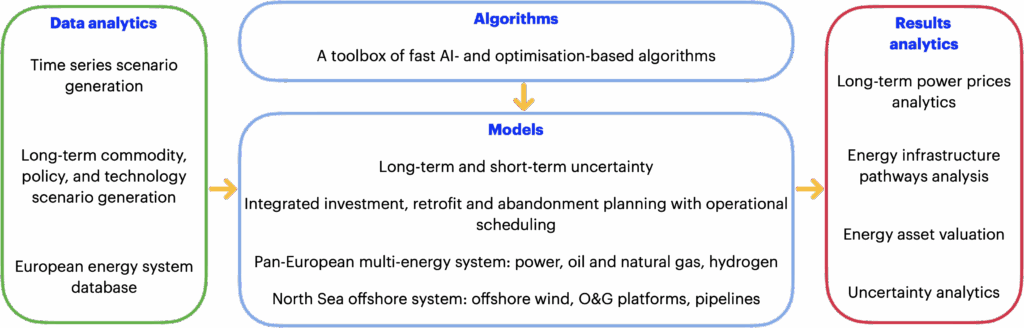
Our technology integrates advanced optimisation and AI methods with explicit representations of uncertainty to support energy system planning and investment decisions. The software is designed to operate at scale, spanning multiple energy carriers, geographic regions, and decision timescales.
Multi-energy and multi-scale system modelling
The technology supports integrated modelling of electricity, heat, transport, and other energy carriers.
Models can be configured at macro scale, including pan-European representations, while retaining the ability to link long-term strategic planning with short-term operational considerations.
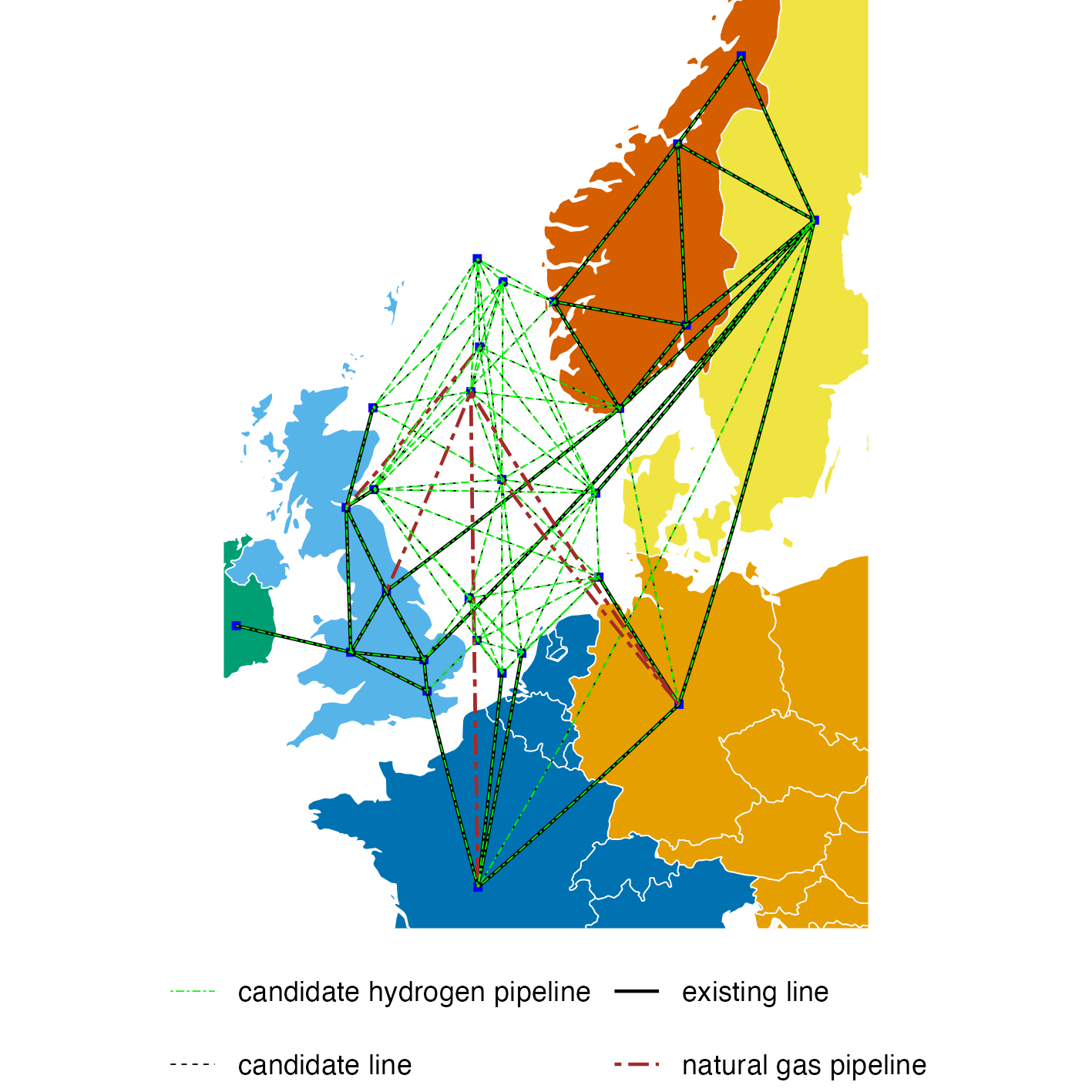
- Pan-European multi-energy model
- Power, heat, hyrogen, oil and gas, CCS
- Investment, retrofit and abandonment planning
Explicit modelling of long-term and short-term uncertainty
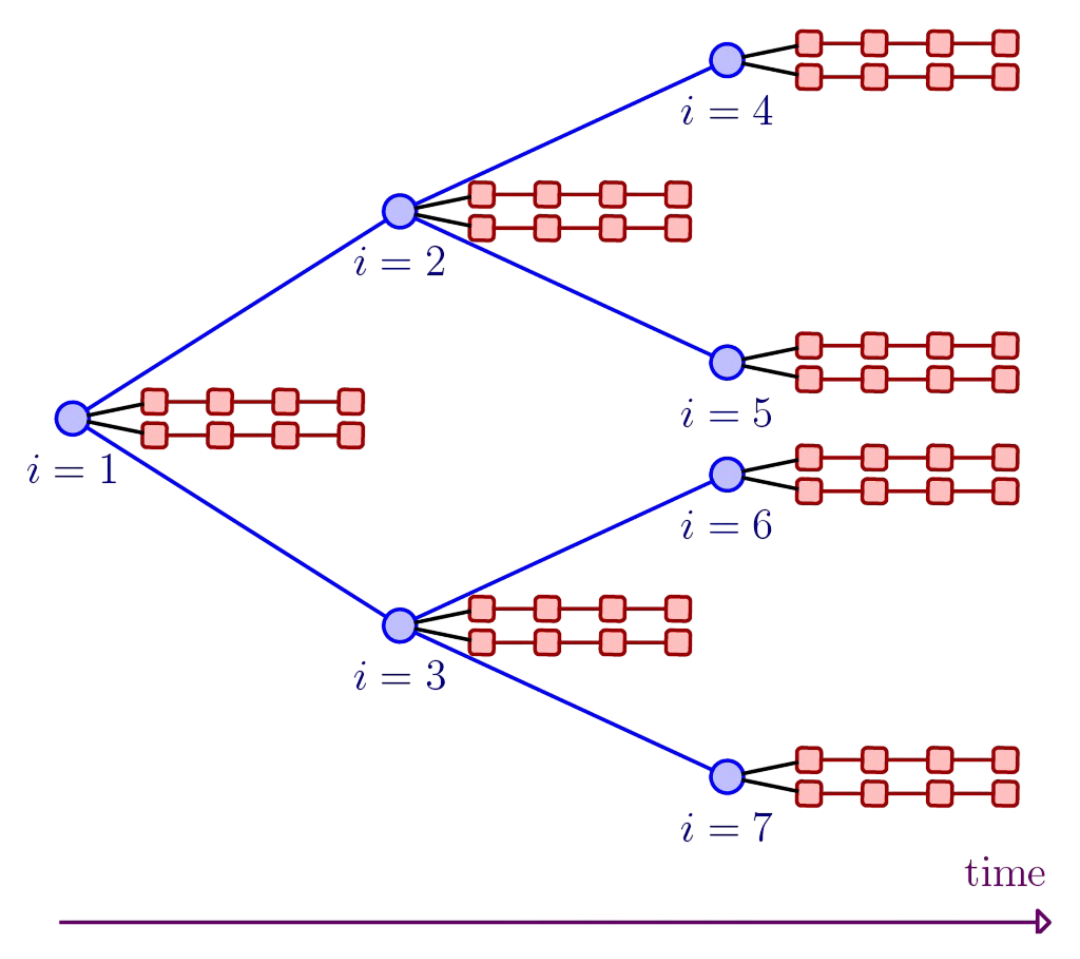
Unlike deterministic planning tools, our models represent uncertainty directly within the optimisation problem.
Sources of uncertainty may include demand evolution, renewable generation, fuel prices, policy assumptions, and technology costs.
This allows decisions to be evaluated for robustness rather than optimality under a single assumed future.
Scalable optimisation and AI algorithms
We employ advanced optimisation algorithms designed for large-scale energy system models.
The underlying formulations and solution techniques are selected to balance computational tractability with modelling fidelity, enabling the analysis of systems with high spatial, temporal, and technological resolution.
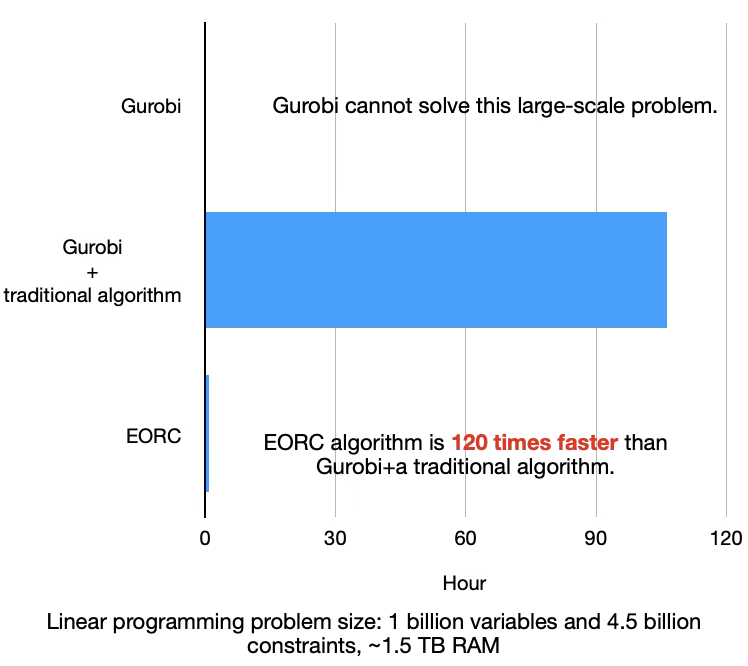
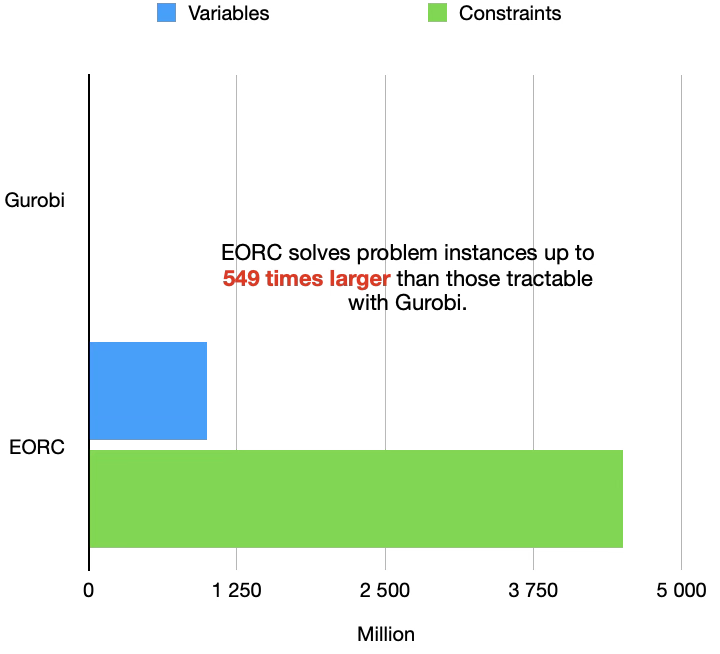
- Proprietary EORC algorithms capable of solving large-scale problems that are intractable for leading commercial solvers
- Neural network enhanced optimisation algorithms
Rapid solution times for large-scale optimisation problems
Tractability beyond commercial solver limits
Scenario generation and evaluation
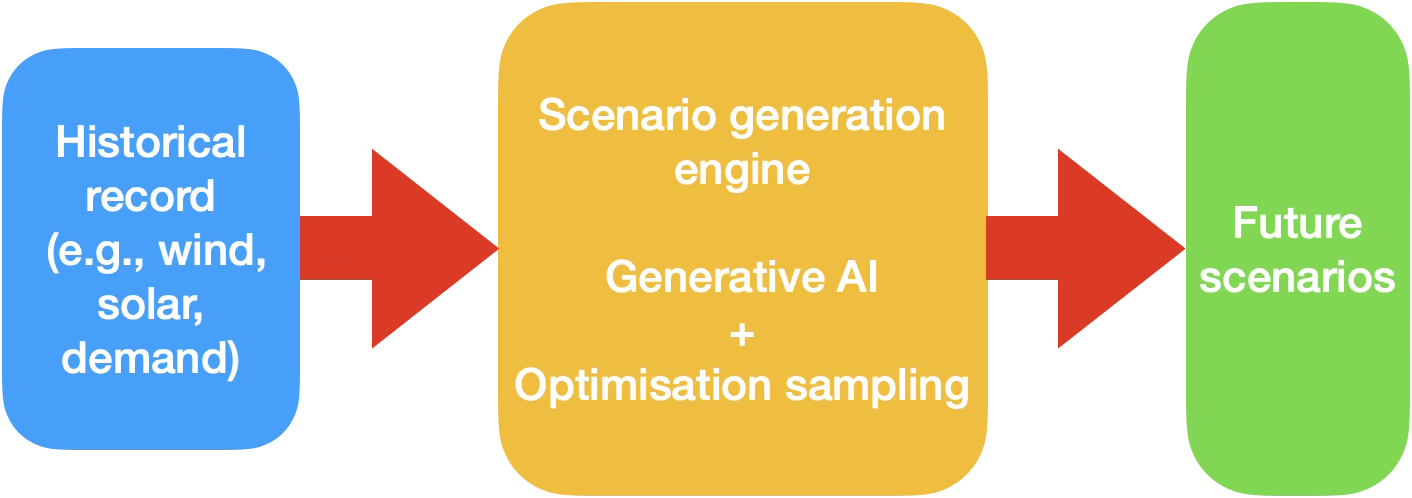
The platform supports the generation and evaluation of uncertainty scenarios across multiple time horizons.
Scenarios may be derived from historical data, probabilistic forecasts, or user-defined assumptions.
Decision outcomes can be compared across scenarios to quantify trade-offs between cost, risk, and system performance.
- Sampling based short-term scenario generation
- AI integrated short-term scenario generation
- Data-driven long-term scenario generation
Software platform and analysis tools
The models are delivered through a user-focused software platform that supports data management, model configuration, and results analysis.
Outputs are designed to facilitate interpretation by technical analysts and decision-makers, enabling transparent exploration of assumptions and outcomes.